




Remote work didn't just change where we work. It quietly changed how we think about travel and what we're willing to settle for.
The Way We Travel Is Changing
For most of history, travel was a pause. You saved up, took time off, went somewhere, came back. Work stayed home; adventure happened elsewhere. The two rarely overlapped, and when they did, it felt like cheating on both.
Then remote work went mainstream. Suddenly, millions of people could technically work from anywhere. The laptop followed us to the kitchen table, the spare bedroom, the coffee shop down the street. Location became flexible, but for many, the day-to-day reality stayed the same: the same desk, the same walls, the same routine.
The question that followed was inevitable: if I can work from anywhere, why am I still always here?
That question is giving rise to a new kind of travel one built around real life, not an escape from it. It's called a coworking trip, or workation. And it might be the most meaningful shift in how we travel since budget airlines opened up Europe.
What Is a Coworking Trip?
A coworking trip sometimes called a workation or a digital nomad retreat is exactly what it sounds like: a trip where you actually work.
But that simple definition misses what makes it special.
A coworking trip isn't grinding away at a hotel desk while everyone else sips cocktails by the pool. It's a structured, intentional experience designed to make remote work feel better than it does at home and to make travel feel more meaningful than a typical holiday.
Here's what it typically looks like in practice: a small group of remote workers travels together to a villa, a house, or a co-living space often somewhere with good weather, beautiful surroundings, and reliable Wi-Fi. During the day, everyone works. The mornings are focused and productive. Meetings happen, deadlines get met, Slack messages get answered. But the evenings? Those belong to something else entirely.
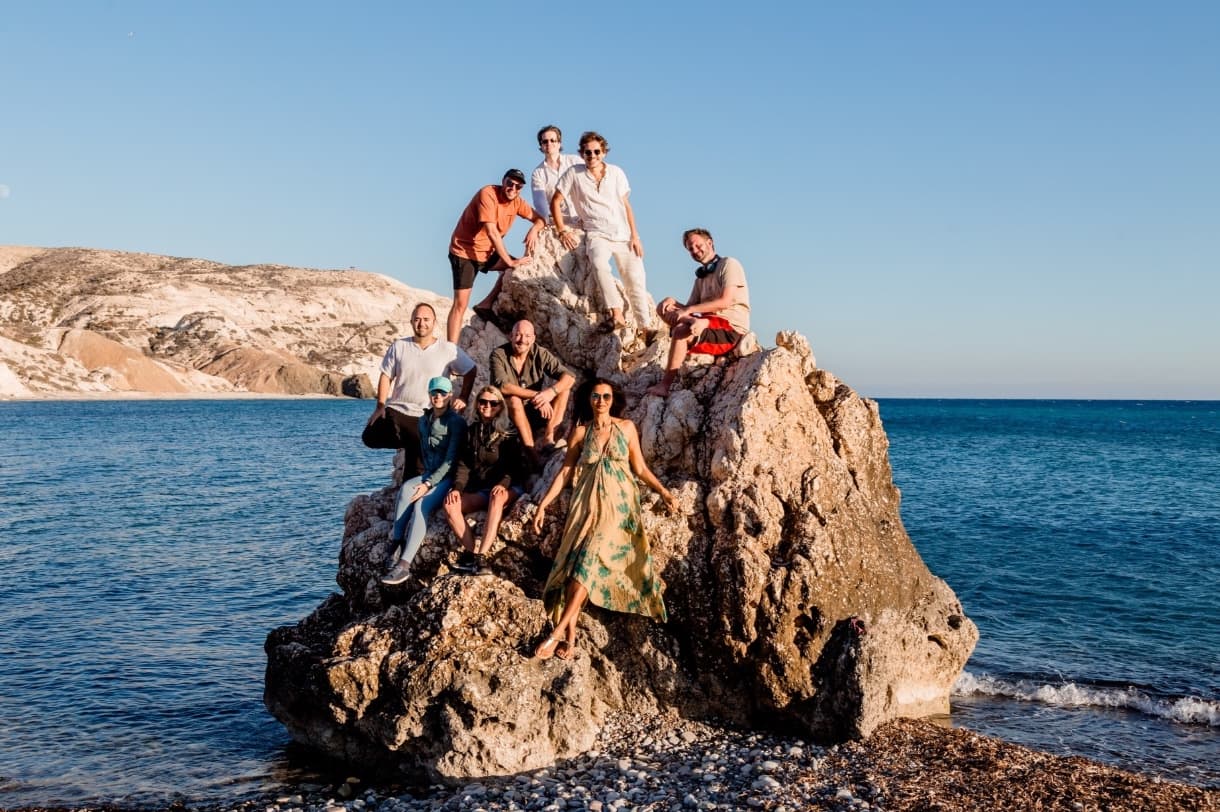
After work, the group cooks together, explores the local area, hikes, swims, talks. The social layer is built in. You're not alone in a rental apartment, staring at your screen and ordering delivery. You're part of something a temporary but genuine community of people who understand exactly what your life looks like, because they're living the same one.
That combination of productivity and connection, of work and wonder, is what defines a coworking trip.
Why This Movement Is Growing
The rise of coworking trips isn't a coincidence. It's a response to a set of real, converging pressures that millions of remote workers are quietly navigating.
Remote work freed us and then left us a little lonely. The freedom to work from anywhere is genuinely wonderful, but it came with a cost that took time to name. When you work from home, the organic social fabric of office life disappears. The casual conversations, the shared lunches, the sense of being part of something all gone. Studies consistently show that loneliness is one of the biggest challenges remote workers face, and it's not a small thing. It affects focus, motivation, and mental health.
We're craving real community, not just connection. There's a difference between being connected having people in your phone, your inbox, your Zoom grid and actually feeling part of a community. Remote workers often have plenty of the former and not enough of the latter. Coworking retreats and coliving experiences for remote workers address this directly. They create the conditions for real relationships: shared meals, shared challenges, shared sunsets.
Traditional travel doesn't fit the new working life. If you work remotely, taking a two-week holiday can feel complicated especially if you're freelancing, running a business, or on a small team. The cost of fully stepping away is high. Coworking trips solve this elegantly. You don't have to choose between seeing the world and doing your job. You do both, at the same time, without compromise.
A new generation of travelers wants depth, not just destinations. The Instagram highlight reel version of travel is losing its appeal. More and more people are looking for experiences that feel meaningful that leave them changed, not just checked-in. Coworking retreats in Europe and beyond offer exactly that: slower travel, deeper connections, real immersion.
Why It's the Future of Travel
Travel has always evolved alongside the way people live and work. The Grand Tour was for aristocrats with months to spare. Package holidays were born when factories gave workers two weeks off. City breaks emerged when cheap flights made weekend escapes possible.
The workation is the next evolution and it fits our moment almost perfectly.
We live in an era of flexibility, but also fragmentation. We have more freedom than previous generations, but often less structure. We're more connected digitally than ever, but lonelier in person. We want experiences that are rich and real, but we can't always afford to step away from our lives entirely.
Coworking trips thread this needle. They let you travel without pausing your career. They give you community without requiring you to uproot your life. They offer the depth and meaning of slow travel while keeping your inbox in check.
And they scale. A coworking retreat in Europe can be as short as a week or as long as a month. You can go once and return transformed, or build a rhythm where every few months you take off somewhere new with a group of like-minded people.
This isn't a niche trend for digital nomads living out of a backpack. It's becoming a mainstream option for anyone who works remotely designers, developers, marketers, consultants, writers, founders. Anyone who has a laptop, a good internet connection, and a nagging sense that there might be a better way to do this.
How Feel.Travel Does It
Feel.Travel was built around a single conviction: that the best coworking trips aren't about the destination. They're about the people.
Every Feel.Travel trip starts with that idea. Groups are kept intentionally small intimate enough that you actually get to know the people around you, not just their names and what they do. There's no awkward icebreaker game or forced networking. The structure of the trip does that work naturally: shared spaces, shared meals, shared moments.
Trips are designed around a weekend check-in rhythm that works with your schedule, not against it. You arrive, settle in, and the week unfolds with a balance that feels almost effortless focused work hours in the morning, afternoons that leave room for exploration, evenings that belong to the group.
The locations are chosen carefully too. Think sun-drenched villas in Southern Europe, mountain retreats with panoramic views, coastal houses with fast Wi-Fi and slow evenings. Places that make you feel something the moment you arrive.
But what Feel.Travel is really building isn't a travel product. It's a community. The people you meet on a Feel.Travel coworking retreat often stay in your life long after the trip ends as collaborators, friends, and fellow travelers. That's the part that's hard to put in a brochure, but it's the part that matters most.
The Takeaway
Travel doesn't have to be an escape from your life anymore. It can be a richer version of it.
Coworking trips, workations, digital nomad retreats call them what you want. What they represent is something genuinely new: a way of moving through the world that doesn't ask you to put your career on hold or sacrifice the things that make travel worth doing.
If you've ever sat at your home desk on a Tuesday morning and thought there has to be a better way to do this you're not wrong. There is.
Ready to explore upcoming Feel.Travel coworking trips? Browse our next destinations and find the one that feels right for you. Your next chapter might start in a villa somewhere you've never been, surrounded by people you haven't met yet.